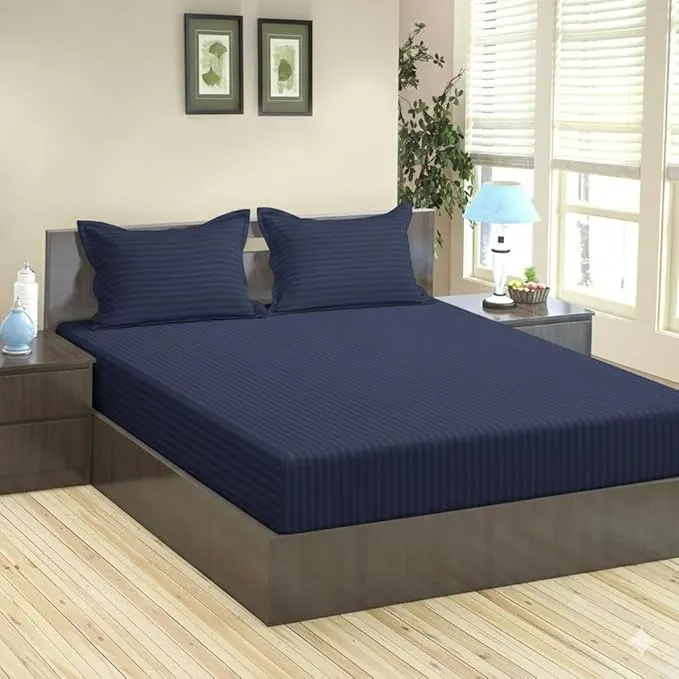
What does TC mean? TC (thread count) is the number of threads woven into one square inch of cloth, counting both directions. 210 TC means 210 threads per square inch; 144 TC means 144. A higher thread count gives a denser, smoother cotton bedsheet that lasts more washes.
For daily-turnover hospitality laundry, 210 TC is the best thread count for hotel bed sheets — its combed-cotton, tighter weave survives roughly 120+ industrial wash cycles versus roughly 40–50 for 144 TC, making it the cheaper option on a 12-month cost-per-use basis despite a higher wholesale price. 144 TC remains sound for low-frequency settings — PGs, hostels, guest overflow rooms — where wash volume is light. Call / SMS our Sanganer factory at 8107492335 to request a wash-tested sample or HORECA bulk pricing.
In This Technical Sourcing Guide
- What Is Thread Count, Really?
- Yarn Specs: Carded vs Combed Cotton
- Industrial Laundry Tolerance: Heat, Bleach & Shrinkage
- The Cost-Per-Use ROI Formula
- The Hospitality Procurement Matrix
- Best Thread Count for Hotel Bed Sheets, by Sector
- Bulk Buy 210 TC — Sourcing Direct From Jaipur
- Our Wash-Tested QC Process
- Frequently Asked Questions
For institutional buyers, thread count isn't a comfort spec — it's a durability spec. This guide sets out the real 144 TC vs 210 TC bedsheet difference under industrial laundry conditions: high-heat calendering, commercial bleach, and hundreds of wash cycles a year, not the gentle home wash cycle most thread-count content is written around.
We manufacture both grades out of Sanganer, Jaipur, and this guide reflects our own tensile-strength testing data, not marketing copy.
What Is Thread Count, Really?
Thread count (TC) is the number of threads — warp plus weft — woven into one square inch of fabric. A 210 TC fabric packs a denser lattice of threads into the same surface area than a 144 TC fabric, which is the structural reason it holds up longer under repeated industrial laundering.
But TC alone doesn't tell the whole story. Two fabrics with the same stated thread count can perform very differently in commercial use depending on the yarn preparation behind them — which is where the real 144 TC vs 210 TC bedsheet difference actually comes from.
- Yarn: Carded cotton
- Wash-Cycle Life: ~40–50 industrial washes
- Shrinkage: ~3–4%
- GSM: ~120–135
- Best For: PGs, hostels, low-frequency guest rooms
- Yarn: Combed cotton
- Wash-Cycle Life: 120+ industrial washes
- Shrinkage: ~1–2%
- GSM: ~150–170
- Best For: 3-star+ hotels, resorts, daily-turnover HORECA
Yarn Specs: Carded vs Combed Cotton
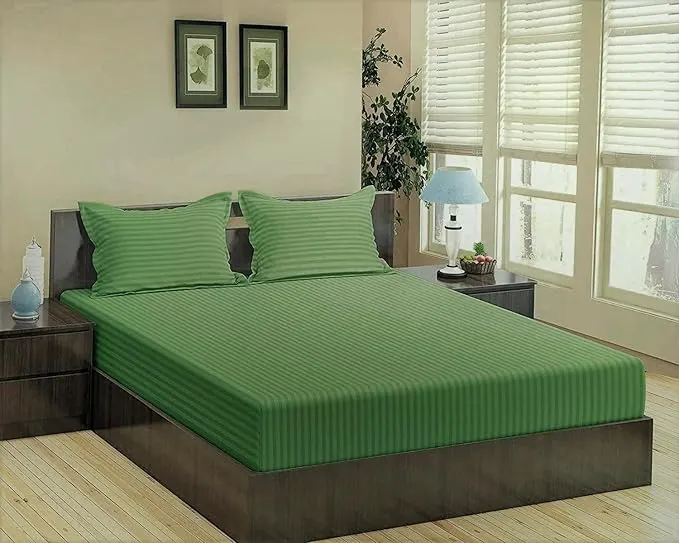
This is the detail most sourcing guides skip, and it's the single biggest driver of why 210 TC outperforms 144 TC under commercial stress — not just the raw thread count.
- 144 TC — Carded Yarn: Standard 144 TC fabric is spun from carded cotton. Carding cleans and aligns the raw fiber but leaves shorter fibers and minor impurities in the yarn. The result is a serviceable, breathable fabric — but one that's structurally more prone to surface pilling as those shorter fibers work loose under repeated mechanical agitation in commercial washers.
- 210 TC — Combed Cotton: Our 210 TC fabric is spun from combed cotton, an additional processing step that removes short fibers and impurities before spinning. The result is a smoother, stronger, more uniform yarn that resists pilling and holds a crisp, substantial hand-feel wash after wash — the tactile quality guests associate with a well-run hotel.
This is the mechanical reason a 210 TC combed-cotton sheet doesn't just start softer — it stays smoother and pill-free significantly longer than a 144 TC carded sheet under identical wash loads.
Want to feel the carded vs combed difference yourself before you commit budget?
📞 Request a Wash-Tested Hotel SampleIndustrial Laundry Tolerance: Heat, Bleach & Shrinkage
Commercial laundries don't wash the way a home machine does. High-heat calender ironing (commonly 180°C or higher, used to flatten and sanitize hotel linen at speed) and industrial-strength bleach/detergent formulations are standard — and both grades respond very differently.
| Stress Factor | 144 TC (Carded) | 210 TC (Combed) |
|---|---|---|
| High-heat calender ironing (180°C+) | Fiber thinning accelerates with repeated exposure | Tolerates sustained high heat with minimal fiber breakdown |
| Commercial bleach / industrial detergent | Faster dye strip and fiber degradation | Holds dye and structure significantly longer |
| Shrinkage after industrial wash | ~3–4% | ~1–2% |
| Practical implication | More frequent replacement, batch-to-batch size drift | Better dimensional stability across large inventories |
For HORECA buyers standardizing hundreds of identical beds, that shrinkage gap matters operationally, not just cosmetically — a 3–4% shrinking sheet drifts out of fit with your mattress program faster, and a visibly mismatched set of bed linens across a property reads as a housekeeping failure to guests, even when the sheets are hygienically clean.
The Cost-Per-Use ROI Formula
This is the number that should actually drive your procurement decision — not the invoice price per piece.
Cost Per Wash = Wholesale Price ÷ Total Wash Cycles Survived| Metric | 144 TC | 210 TC |
|---|---|---|
| Typical wholesale price | ~₹200/pc | ~₹300/pc |
| Wash cycles survived | ~40–50 | 120+ |
| Cost per wash | ₹200 ÷ 45 ≈ ₹4.44 | ₹300 ÷ 120 ≈ ₹2.50 |
Even though 210 TC costs roughly 50% more per piece at purchase, it costs almost half as much per wash over its working life — because it survives roughly 2.5x more wash cycles.
Scaled to a 12-Month HORECA Laundry Rotation (~150 washes/year)
That's a real annual saving of roughly ₹285 per bed position by choosing the "more expensive" fabric — before accounting for the labor cost of more frequent replacement, the guest-facing risk of visibly worn linen, and the procurement overhead of reordering three times a year instead of once.
The Hospitality Procurement Matrix
Use this table to match thread count to your actual operational profile.
| Metric | 144 TC | 210 TC |
|---|---|---|
| Ideal Target Sector | PGs, hostels, budget lodges | 3-star+ hotels, resorts, daily-turnover HORECA |
| Wash Lifespan | ~40–50 cycles | 120+ cycles |
| Fabric Feel | Light, crisp, breathable | Smooth, substantial, anti-pill finish |
| Weight (GSM) | ~120–135 GSM | ~150–170 GSM |
| Yarn Type | Carded cotton | Combed cotton |
| Shrinkage After Industrial Wash | 3–4% | 1–2% |
| Wholesale Price Range | ~₹150–₹250/pc | ~₹250–₹350/pc |
Best Thread Count for Hotel Bed Sheets, by Sector
- 3-star+ hotels and resorts (daily turnover): 210 TC is the operational mandate. The wash-cycle and cost-per-use math above make this the lower-risk, lower-cost choice within the first 12 months, not just the "premium" choice.
- PGs and student hostels: 144 TC is generally sufficient — lower wash frequency per sheet and tighter budgets both favor the lower entry cost.
- Boutique guesthouses and mixed-occupancy properties: A hybrid stock — 210 TC for premium/repeat-guest rooms, 144 TC for overflow and budget categories — is common and lets you match spend to actual wear.
- Export and D2C resale: 210 TC supports a stronger quality narrative and lower return rates in markets where buyers can feel the difference in hand.
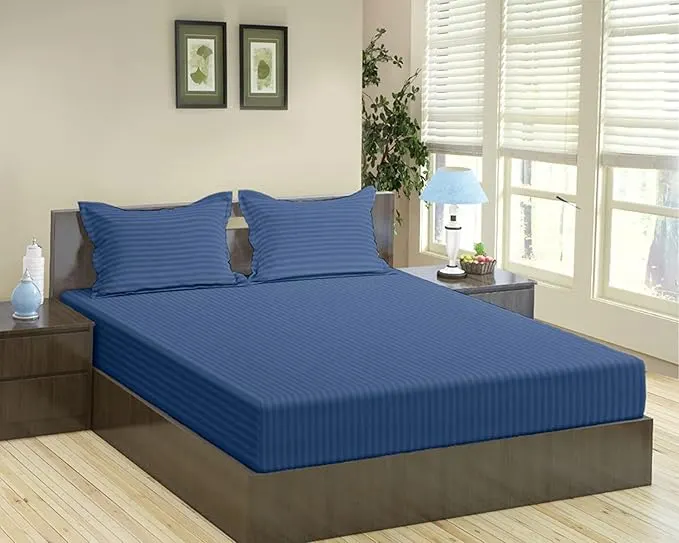
Bulk Buy Hotel White Bedsheets 210 TC — Sourcing Direct From Jaipur
If your property is ready to bulk buy hotel white bedsheets in 210 TC, sourcing direct from the manufacturer — not a trader — is what actually delivers the wash-life numbers above. A trader reselling mixed-origin fabric can't consistently guarantee yarn type or weave density order to order, which means the wash-cycle performance you get on your sample may not match your bulk delivery six months later.
As a hospitality bed linen manufacturer, Jaipur-based and Sanganer-manufactured, we control the full chain — cotton sourcing, combing, weaving, cutting, and finishing — under one roof, so the 210 TC fabric in your reorder is structurally identical to the fabric in your first sample batch.
Commercial Wash Tested Wholesale Bedsheets India — Our QC Process
We don't just state a thread count and a GSM — we test to it. Every 210 TC production batch intended for HORECA and export buyers goes through:
- Tensile strength testing: fabric samples are pulled to measure breaking strength and elongation, confirming the yarn can withstand sustained industrial mechanical stress before a batch ships.
- Accelerated wash-cycle simulation: sample sets are run through repeated high-heat, high-agitation wash cycles to validate the shrinkage and pilling behavior claimed in this guide against the actual production batch.
- Colorfastness verification: dye retention is checked against the bleach and detergent strength typical of commercial laundry, not just a mild domestic wash.
- Pre-shipment dimensional QC: finished sheets are measured against the stated cut to confirm they meet export-ready sizing tolerance.
Trader-sourced inventory is cut and finished to whatever the current fabric roll allows — dimensions and yarn quality can shift order to order with no accountability. As a direct manufacturer, we control the entire chain under one roof and stand behind every batch with tensile strength testing, not just a thread count printed on an invoice.
Don't Commit to a Bulk Order on a Spec Sheet Alone
Run your own laundry's actual wash cycle against a real sample before you scale. Tell us your property type and daily linen volume.