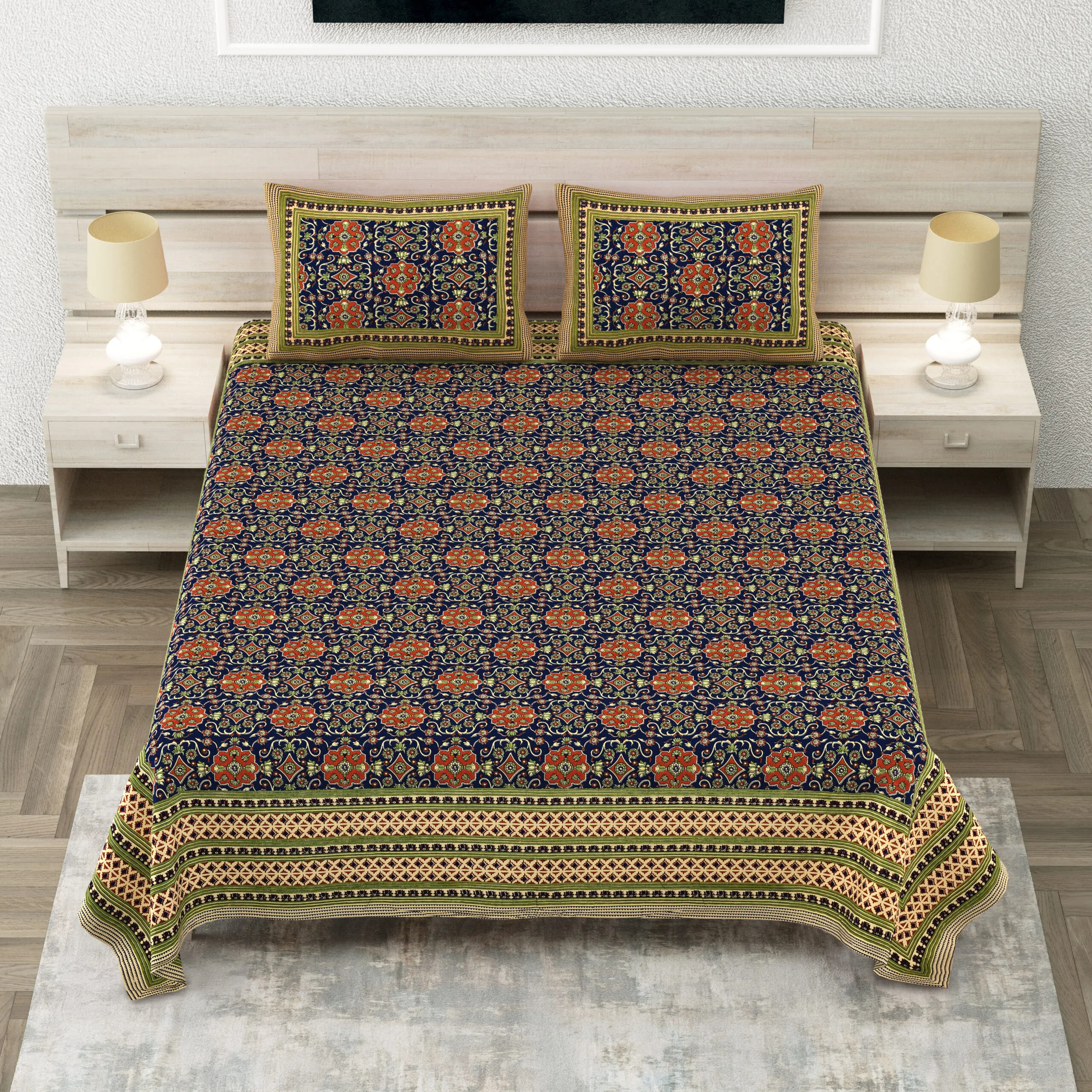
For sustainable year-round wholesale revenue in India, dohar (AC blankets) comprehensively outsells traditional winter quilts. A dohar is a 12-month product (dominating summer, monsoon, and AC environments) whereas heavy Jaipuri razai movement is fiercely isolated to October–February. Cotton dohar wholesale price scales from ₹425–₹750/pc (double), while authentic premium quilts initiate at ₹880/pc. Both product lines effortlessly command a 2× retail margin. Our mathematically optimized B2B stocking strategy is a strict 60% dohar / 40% quilt allocation. As one of the established wholesale AC blanket suppliers in India and a Jaipuri quilt bulk manufacturer, we ship both lines with full master carton packaging data for accurate freight planning, plus tiered volume discounts and private label options. Call / SMS Jaipur Bedsheet Wholesale at 8107492335 for direct factory pricing on both.
In This B2B Procurement Guide
- What is a Jaipuri Dohar vs a Traditional Quilt?
- Technical Specs Comparison — Dohar vs Razai
- Verified Factory Sales Data — What Actually Moves
- Seasonal Procurement Demand Cycles
- Retail Margin Analysis — Per Unit vs Annual Yield
- Regional Inventory Strategy — By Indian State
- The 60/40 Retail Inventory Algorithm
- Procuring from Our Jaipur Factory
- Master Carton Capacity & Freight Calculation
- Tiered Volume Discounts & Month-End Restock Sales
- Private Labeling & White-Label OEM Services
- Beyond Bedding — Our Apparel Line
- Sourcing FAQ
Operating directly out of our manufacturing facility in Sanganer—the historic textile hub located precisely 18 kilometers south of central Jaipur—I have been engineering and dispatching both lightweight dohars and heavy winter quilts for over fifteen years.
Every year around July, as B2B purchasing cycles accelerate, I field the identical inquiry from wholesale buyers across the continent: "Which product should command more of my capital for the upcoming festive season — the dohar or the razai?" It is unequivocally the correct question. However, the statistically accurate answer is significantly more nuanced than what standard textile traders will openly disclose.
Our family operation has provisioned thousands of commercial retailers across Maharashtra, Gujarat, UP, Rajasthan, and the affluent Southern corridors. As one of the more established B2B home textiles Jaipur manufacturers in this segment, the institutional demand patterns we track are highly measurable, ruthlessly consistent, and completely transparent if you understand the data. This guide relies purely on active manufacturing and dispatch metrics — completely bypassing generic marketing fluff to deliver the exact inventory logic you need to scale your margins.
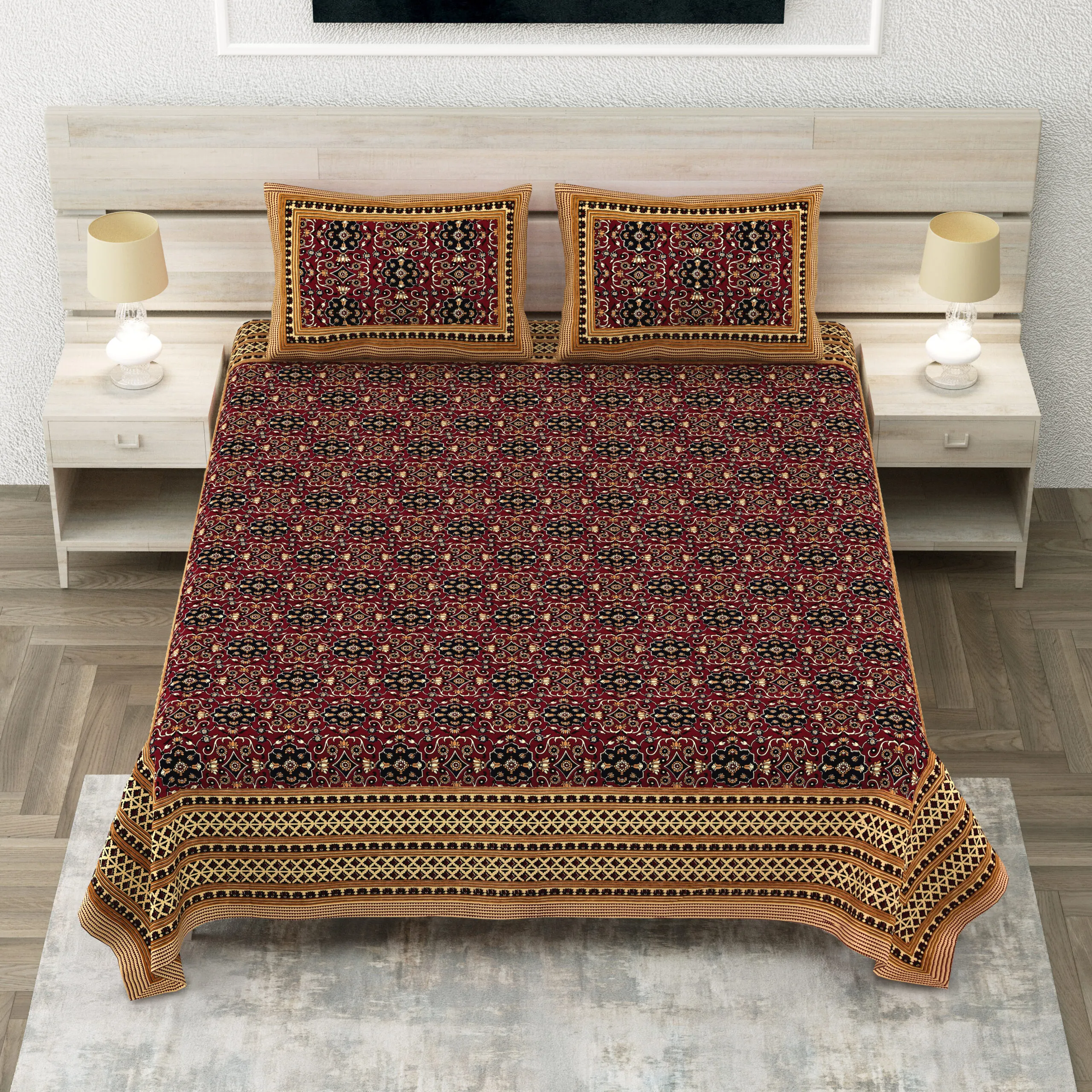
What is a Jaipuri Dohar vs a Traditional Quilt?
- Architecture: 2–3 fused layers of premium cotton fabric — typically utilizing breathable mulmul or structured dull cotton. Specifically omits heavy internal filling.
- Thermal Weight: 1.2–1.8 kg for a standard double unit.
- Insulation Profile: Light — mathematically perfect for sustained AC exposure, intense summer nights, and mild winter transitions.
- Etymology: Derived from the Hindi "dohrana" — meaning to effectively double or layer.
- Market Lifecycle: Active year-round across 80% of the subcontinent — dominating fan-speed environments, AC dependencies, and humid monsoons.
- Maintenance: Aggressively machine washable — actually increases in tactile softness post-laundering.
- B2B Factory Base: ₹425–₹750/pc (double format).
- Architecture: Traditional 3-layer system — decorative outer cotton, pure 'kapas' (natural cotton) thermal core, and soft inner cotton. Expertly hand-filled and meticulously quilted.
- Thermal Weight: 1.0–1.5 kg (specifically featuring 500–750g of dense cotton fill).
- Insulation Profile: Medium to Extreme — explicitly engineered for Northern winters and excessively cold AC environments.
- Etymology: "Razai" — possessing Persian roots, heavily popularized throughout the historic Mughal era.
- Market Lifecycle: Hyper-focused peak between October and February. Retains niche year-round demand strictly within premium luxury segments.
- Maintenance: Requires gentle machine cycles or dedicated dry cleaning to protect the internal density.
- B2B Factory Base: ₹880+/pc (single mulmul format).
Technical Specs Comparison — Dohar vs Razai
| Specification Metric | Double Dohar (AC Blanket) | Single Quilt (Jaipuri Razai) |
|---|---|---|
| Physical Dimensions | 90"×100" (Standard Double) | 60"×90" (Standard Single) |
| Outer Fabric Shell | Dull Cotton (Rigorous Export Grade) | 100% Breathable Mulmul Cotton |
| Internal Insulation | Zero fill — relies purely on layered cotton thermodynamics | 750g Pure Kapas (natural cotton fiber fill) |
| Gross Transport Weight | ~1.4 kg | ~1.25 kg |
| Design Output | Fully Reversible — printed on dual sides | Single-sided decorative presentation |
| Retail Packaging | Standard industrial poly bag | Premium transparent PVC gifting bag |
| Master Carton Capacity | 25–30 pieces/carton | 20–25 pieces/carton |
| Wholesale Factory Cost | ₹425–₹750/pc | ₹880+/pc |
| Target Retail Markup | ₹900–₹1,600 | ₹1,600–₹2,800 |
| Primary B2B Seasonality | Sustained Year-Round Liquidity | Violent Oct–Feb spike (Stable AC use in luxury sector) |
| Global Export Liquidity | High (Dominates UK/EU Summer quarters) | Very High (Dominates US/UK/AU Winter quarters) |
Verified Factory Sales Data — What Actually Moves
We absolutely reject generic marketing claims. The following metrics are extracted directly from our internal B2B wholesale dispatch ledger, tracking 2,541 commercial orders across India from August 2025 to May 2026.
- Standard Bedsheets: Constituted 50% of aggregate volume — remaining the undisputed, foundational #1 category for our retail partners 365 days a year.
- Dohar (AC Blankets): Showcased relentless year-round movement — featuring massive secondary spikes in April–June (anticipatory summer procurement) and August–September (aggressive pre-Diwali stocking).
- Quilt/Rajai: Exhibited an incredibly aggressive, isolated seasonal pattern — B2B orders spiked violently in September–November, subsequently flatlining between March and June.
- Peak System Load: December 2025 marked our highest output at 400 bulk orders. The winter surge was entirely fueled by quilts, while dohar volumes maintained their sturdy, unshakable baseline.
The B2B Factory Verdict
Seasonal Procurement Demand Cycles
Critical Sourcing Intel for Wholesalers: The vast majority of novice retailers commit a fatal error: they exclusively stock quilts heading into winter and exclusively pivot to dohars heading into summer. The mathematically superior strategy is to relentlessly maintain a foundational inventory of both 365 days a year—subsequently injecting deep seasonal volume where appropriate. Here is the consumer psychology: a patron entering your store to procure a winter quilt in late October is highly likely to spontaneously purchase a lightweight dohar for their permanently air-conditioned master bedroom—if and only if you actually stock it. That is one customer visit instantly yielding dual transactions, radically spiking your average order value.
When executing bulk Diwali gifting procurement (targeting both VIP corporate and premium personal demographics), both printed Bagru dohars and Dabu quilts serve as incredibly potent inventory. A dohar set encased in PVC packaging retails easily at ₹1,200–₹1,800—perfectly serving the high-volume mid-tier corporate budget. Conversely, an authentic mulmul quilt packaged in a robust PVC bag commands a ₹2,000–₹3,000 retail valuation—dominating the executive luxury gifting bracket. If your business facilitates B2B Diwali gifting, you must definitively stock both tiers to capture all available capital.
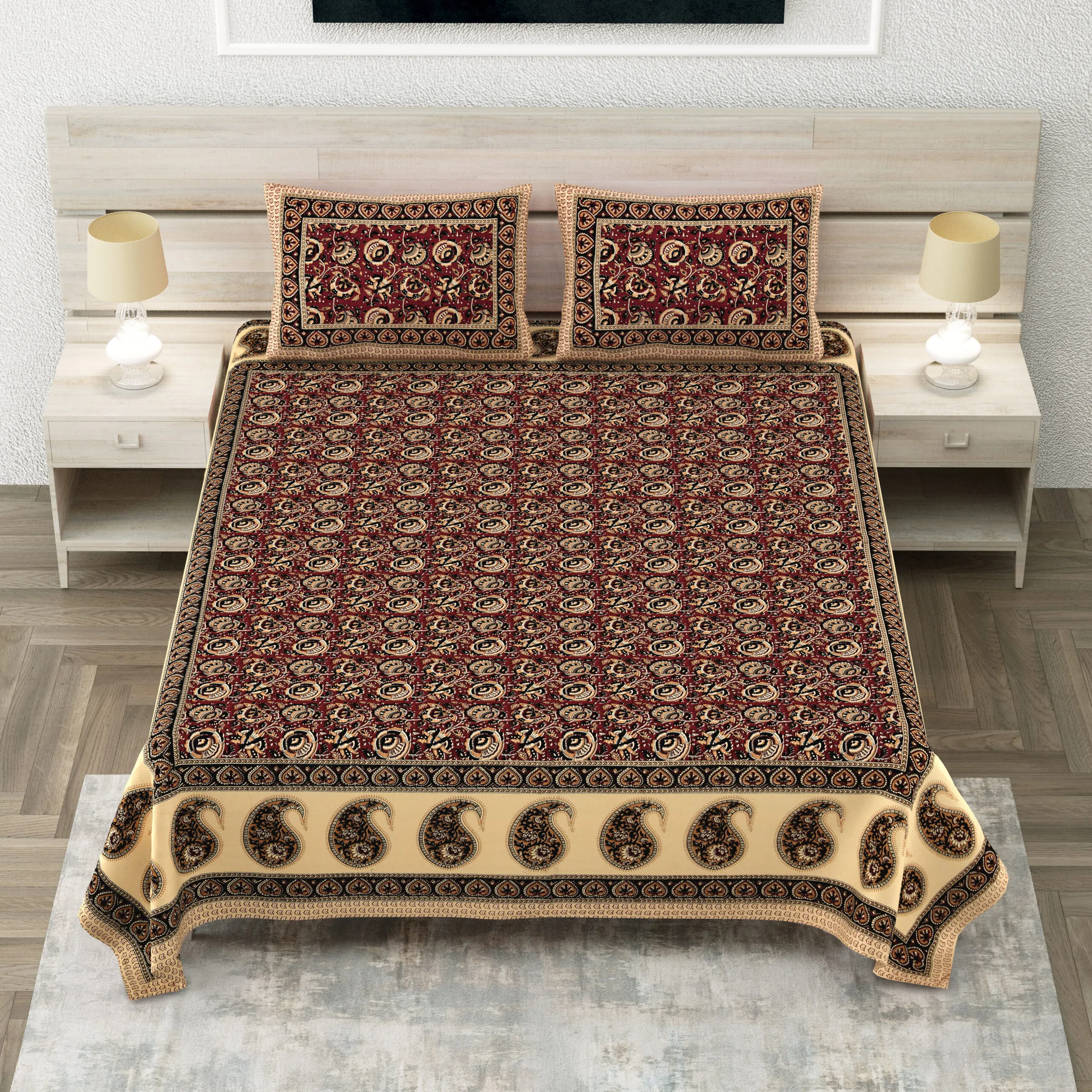
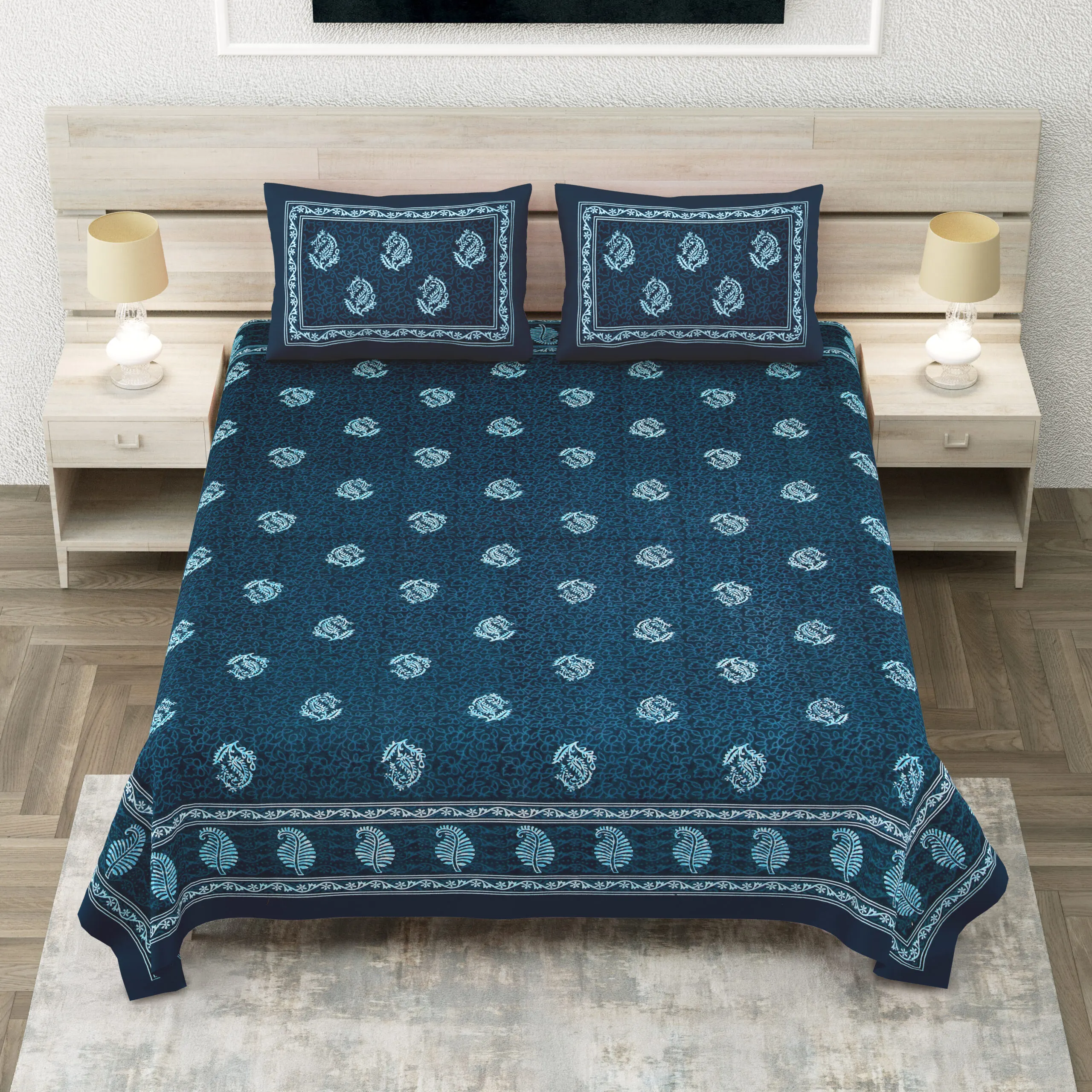
Ready to acquire direct factory pricing for our complete Dohar and Quilt lines?
📞 Access Wholesale CataloguesRetail Margin Analysis — Per Unit vs Annual Yield
| Financial Metric | Dohar (Double AC Blanket) | Quilt (Single Jaipuri Razai) |
|---|---|---|
| Wholesale Factory Cost | ₹425–₹750/pc | ₹880+/pc |
| Verified Retail Price Point | ₹900–₹1,600 | ₹1,600–₹2,800 |
| Absolute Gross Profit Per Unit | ₹475–₹850 | ₹720–₹1,920 |
| Percentage ROI | ~2× Markup | ~2× to 3× Markup |
| Inventory Turnover Rate (Turns/Yr) | Extremely High — Liquid 12-month asset | Restricted — Bound to a 4–5 month thermal peak |
| Aggregate Annual Yield | Highest (Driven by relentless volume × margin) | High peak extraction, but stagnant off-season |
| Capital Holding Risk | Negligible — Liquidates continually | Moderate — High risk of dead stock if aggressively over-ordered |
| Physical Storage Footprint | Highly compact | Voluminous (Driven by dense 750g internal fill) |
While the raw monetary margin per individual unit leans heavily in favor of the quilt, the velocity of capital turnover (how rapidly you liquidate and replenish inventory over a fiscal year) is profoundly dominated by the dohar. Consider the mathematics: A commercial retailer moving 100 dohars at a conservative ₹600 margin generates ₹60,000 in highly liquid capital. Conversely, a retailer improperly hoarding 100 heavy quilts from late November straight through to August is bleeding capital on dead storage space and violently constricting their purchasing power for 9 consecutive months.
Regional Inventory Strategy — By Indian State
- Maharashtra (Mumbai, Pune, Nashik): The Dohar rules as the undisputed king. The climate mandates AC dependency nearly 8+ months a year within dense apartment infrastructure. Heavy quilts move strictly from late October through January. Optimal Inventory Ratio: 70% Dohar, 30% Quilt.
- Gujarat (Surat, Ahmedabad): Closely mirrors the Maharashtrian dynamic. Aggressive thermal heat requires AC utility, meaning dohars move perpetually. Quilts are heavily targeted explicitly for the massive Diwali gifting surge. Optimal Inventory Ratio: 65% Dohar, 35% Quilt.
- Uttar Pradesh (Lucknow, Kanpur, Agra): Experiences India's most violent winter transition. Quilt liquidation is fierce and reliable from November through February. Dohars bridge the remaining months. Optimal Inventory Ratio: 50% Dohar, 50% Quilt.
- Rajasthan (Jaipur, Jodhpur): A climate of brutal extremes—searing summers followed by genuine, freezing winters. Quilt demand here is authentic and structural (not merely for gifting). Optimal Inventory Ratio: 45% Dohar, 55% Quilt.
- Telangana / Karnataka (Hyderabad, Bangalore): Overwhelmingly Dohar territory. Winters are mild, but AC environments are ubiquitous year-round. Quilts are utilized almost exclusively as premium corporate or wedding gifting assets. Optimal Inventory Ratio: 75% Dohar, 25% Quilt.
- Global Export (UK, US, EU): Highly fluid for both—dohars are heavily sourced for the Northern Hemisphere spring/summer, while quilts dominate autumn/winter. Importers routinely manifest consolidated FCL shipping containers blending both product architectures.
The Retail Inventory Algorithm: The 60/40 Formula
Distilled directly from 15 years of factory dispatch analytics, here is the iron-clad inventory formula utilized by our most profitable B2B partners:
Allocate your capital exactly: 60% Dohar + 40% Quilt/Rajai. This establishes a highly resilient baseline for the vast majority of Indian demographics. Naturally calibrate based on your strict geography: Deep North Indian retailers must equalize to 50/50; Southern retailers must pivot aggressively to 70/30. This mathematical structure guarantees sustained, frictionless cash flow via dohar velocity while surgically extracting the massive winter premium margins presented by quilts.
Strategic Procurement Timeline:
- Jan–Feb: Aggressively accumulate dohar volume targeting the brutal summer sprint (Mar–Jun). Dohar sell-through spikes highest when shelves are fully stocked early.
- Jul–Aug: Execute your heaviest dual-procurement. Stock dohar for the late monsoon/early festive rush, and simultaneously secure early quilt inventory ahead of Diwali. This is the most vital B2B buying window of the year.
- September: The absolute final window to lock in quilt inventory prior to Diwali. Sanganer manufacturing bandwidth maxes out entirely—failing to order here guarantees disastrous dispatch delays.
- Nov–Dec: The pinnacle of winter quilt liquidation. If your inventory is not deeply fortified by early November, you have entirely sacrificed the Q4 margin spike.
To safely capture the Diwali 2026 (October 20) revenue spike, your wholesale B2B order must be finalized and dispatched from our factory by September 1 at the absolute latest. Accounting for manufacturing lead times and intense nationwide logistical congestion, any order placed in October mathematically risks arriving post-Diwali. Connect with our Call / SMS desk instantly to secure your Q4 production capacity.
Procuring from Our Jaipur Factory
Here is exactly what we engineer and dispatch in bulk directly from our Sanganer facility (located ~18 km from Jaipur center):
| Product Category | Dimensions | Textile Specs | Gross Weight | Master Carton Qty | Factory Wholesale Tier |
|---|---|---|---|---|---|
| Double Dohar — Reversible | 90"×100" | Premium Dull Cotton (Export Spec) | ~1.4 kg | 25–30 pcs | ₹750+/pc |
| Single Dohar — Reversible (Pack of 2) | 58"×87" (Each) | Standard Cotton (Export Spec) | ~1.8 kg (Aggregate) | 15–18 packs | ₹850/pack |
| Single Mulmul Quilt / Heritage Rajai | 60"×90" | 100% Breathable Mulmul | ~1.25 kg | 20–25 pcs | ₹880+/pc |
All items boast an uncompromising export-ready finish, embrace comprehensive design variations, and are accessible strictly in wholesale B2B volumes. As a direct Jaipuri quilt bulk manufacturer, we also welcome buyers who simply want to buy Jaipuri razai direct factory rather than through a Jaipur trading agent. Call / SMS 8107492335 to request our updated digital catalogs, exact dynamic pricing, and MOQs.
Master Carton Capacity & Freight Calculation
Volumetric freight is calculated on carton count, not piece count, so knowing your master carton capacity upfront lets you work out landed cost before you place an order rather than after.
Double dohars pack 25–30 pieces per standard master carton; single dohar packs (sold as a pair) run 15–18 packs per carton; single mulmul quilts, being bulkier due to the internal kapas fill, pack 20–25 pieces per carton. Share your target order volume with our desk and we will return exact carton counts, gross carton weight, and CBM so your freight forwarder can quote sea, air, or surface transit without guesswork.
Tiered Volume Discounts & Month-End Restock Sales
Beyond our published wholesale rate, larger orders unlock additional tiered pricing:
5% off the standard wholesale rate on orders of 50+ units per design, and 10% off on orders of 150+ units per design. We also run a recurring Month-End Restock Sale on select dohar and quilt designs nearing the end of a production run, giving early or repeat buyers a further discount on ready stock that would otherwise sit in the warehouse. Call / SMS our desk to ask what's currently included in the active Month-End Restock Sale before you place your next order.
Private Labeling & White-Label OEM Services
A meaningful share of our B2B home textiles Jaipur clients are e-commerce resellers and boutique owners who want a finished product carrying their own brand, not ours. For qualifying bulk orders, we offer:
- Custom brand tags: woven or printed tags stitched into the dohar or quilt at the point of manufacture.
- White-label PVC packaging: our standard transparent PVC gifting bag reprinted or overlaid with your logo instead of ours.
- Insert cards: care instructions, brand story cards, or QR-linked packaging inserts printed to your specification.
This service applies across both product lines, whether you're operating as a Jaipuri quilt bulk manufacturer's reseller partner or building a private-label dohar catalogue for Amazon, Meesho, or your own storefront. Private label runs carry a separate minimum above our standard bulk tier given the setup cost in custom tagging and packaging, so confirm current thresholds with our desk before finalizing artwork.
Want your own brand tag on our dohar and quilt range?
📞 Ask About Private Label ServicesBeyond Bedding — Our Apparel Line
Alongside dohars, quilts, and bedsheets, our Sanganer facility also manufactures premium cotton apparel, including block-printed cotton suit sets paired with matching malmal dupattas. Retailers already stocking our home textiles frequently add this apparel line to the same purchase order to diversify their catalogue without onboarding a second supplier. If you're interested in a combined home textile and apparel order, mention it when you Call / SMS our desk and we'll share the current apparel catalogue alongside your dohar and quilt quote.