
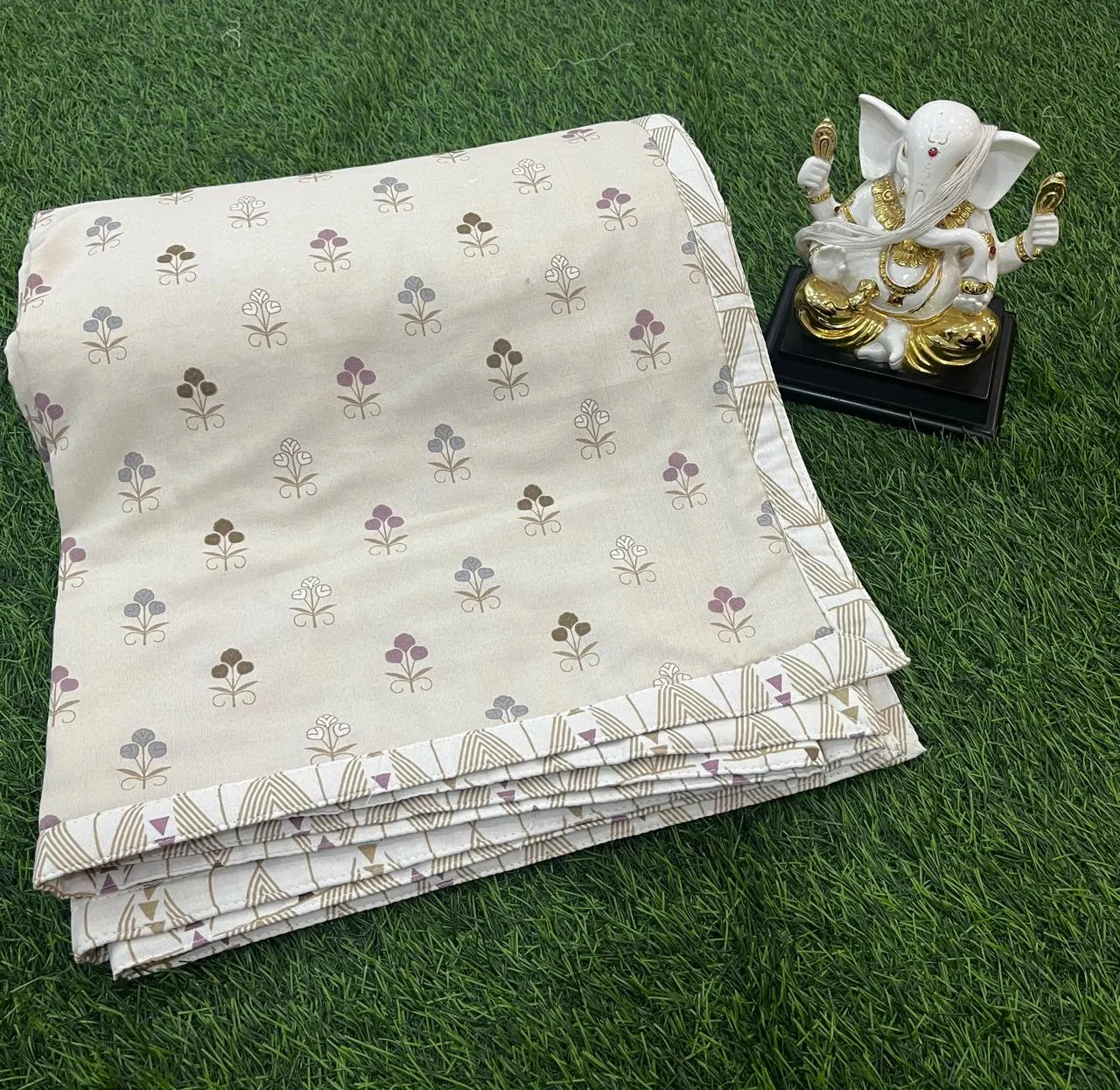
Jaipuri razai (quilted winter bedding) demand starts building in September and peaks November-December. Buying Jaipuri razai factory price direct from a Sanganer manufacturer instead of through a trader typically runs ₹950 to ₹2,500 per piece depending on print technique and fill weight (GSM) — with retail resale commonly landing 45-90% above that factory cost, depending on tier and market. The optimal order window is July to September, and for orders of 500+ units we run private label and hand-stitched Jaipuri quilt bulk programs.
What This Guide Covers
The Annual Demand Curve — When Razai Actually Sells
Every July, I get the same conversation with wholesale buyers: "Is it too early to think about winter stock?" The honest answer is no — July is exactly the right time, and waiting until October is the single most common mistake I see new buyers make in this category. Quilted winter bedding — one of the best winter items for textile retail alongside dohars and heavy quilts — has a narrower selling season than everyday bedsheets, which makes order timing far more important than for year-round products.
The practical implication: stock that arrives in your warehouse in November is already behind the curve. Your retail customers start asking for warm bedding as temperatures drop in late October — if you don't have stock on shelf by then, you've lost the early-buyer segment, which is often the segment willing to pay full price before clearance discounting begins later in the season.
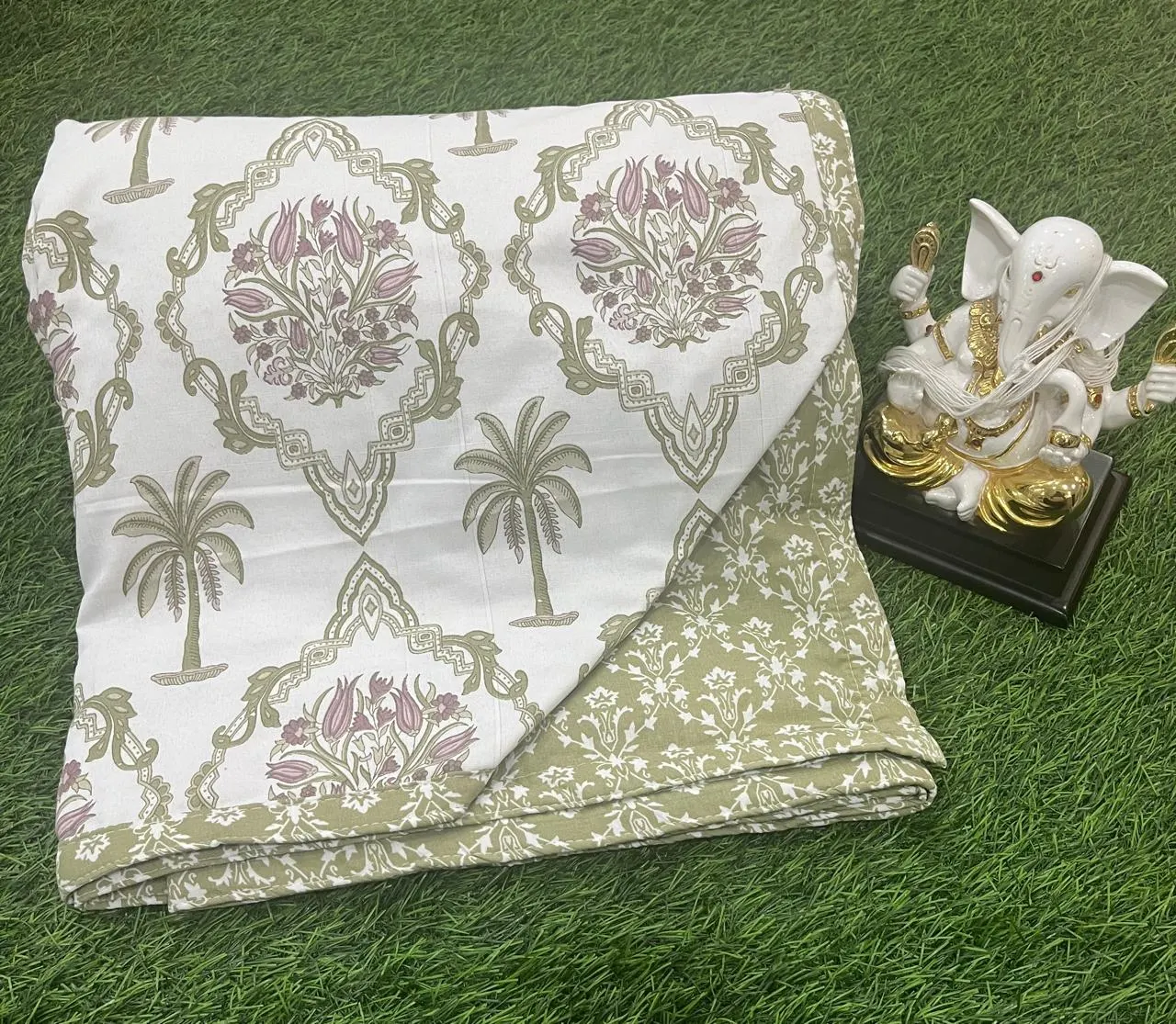
The Order Window — Why July-September Beats October
Three factors compound against buyers who delay ordering until October:
- Production capacity tightens: Jaipur's manufacturing base — ours included — sees simultaneous demand from winter bedding buyers and Diwali corporate gifting buyers in the same September-October window. Capacity booked early gets prioritised; late orders compete for whatever remains.
- Courier networks slow down: The festive season creates a nationwide courier volume spike. Dispatch times that are 2-5 working days in July can extend significantly during the October-November rush.
- Your selling window shrinks: Every week your stock arrives late is a week of selling season you don't get back. A buyer who orders in July and receives stock in August has a full season to sell.
Market Pricing & Profitability
Published wholesale and retail listings across the Jaipur razai market in 2026 show the following price bands, which procurement teams can use as a reference point when evaluating supplier quotes:
| Product Type | Factory Price Direct | Positioning |
|---|---|---|
| Modern print, premium cotton razai | ₹950/pc | Entry-accessible tier |
| Hand block printed razai | ₹1,390/pc | Mid-premium, craft story |
| Double bed printed cotton razai | ₹1,430/pc | Standard double bed market rate |
| Hand block, reversible, white base premium | ₹2,500/pc | Premium reversible tier |
Our quilted bedding range — including the double bed dohar and single bed dohar pair in mulmul, cotton, and dull cotton fabric tiers — sits across comparable wholesale price points, with the advantage of disclosed GSM filling and a confirmed 15-day fresh design cycle that most listed competitors do not specify.
Wholesale Quilted Bedding Business Margin — Doing the Math
Buyers evaluating wholesale quilted bedding business margin should run the numbers against actual regional retail prices rather than assume a flat markup. As an illustration only — actual margins depend on your local retail pricing and overheads:
| Factory Cost | Common Retail Range | Illustrative Gross Margin |
|---|---|---|
| ₹950 (modern print) | ₹1,600 – ₹1,800 | ~40-47% |
| ₹1,390 (hand block) | ₹2,200 – ₹2,600 | ~37-47% |
| ₹1,430 (double bed cotton) | ₹2,300 – ₹2,700 | ~38-47% |
| ₹2,500 (reversible premium) | ₹3,800 – ₹4,500 | ~34-44% |
Sourcing factory-direct rather than through a trader typically improves this margin by removing an intermediary markup layer, which is the core economic argument for direct factory supply — covered in the next section.
Capital Allocation Framework for First-Time Buyers
- Don't speculate on a large lot for your first season. Size your initial order to roughly 4-6 weeks of expected sell-through based on your existing retail footfall or customer base — not based on how much warehouse space you have available.
- Reorder mid-season based on actual sell-through. Once October-November demand confirms your initial estimate, place a second order while production capacity is still reasonably available.
- Treat unsold winter stock as a known carrying cost, not a sunk loss. Quilted bedding does not spoil — unsold stock carries forward to next season.
Get current factory-direct pricing across our quilted bedding range
Call Now →Technical Quality Assurance — GSM, Filling & Quilting
Two razai at the same listed price can behave completely differently after three winters of use. The difference usually comes down to three technical factors that most listings never disclose: fill weight (GSM), filling consistency, and quilting construction.
Fill Weight (GSM)
Lightweight, transitional-season razai typically run around 200 GSM. Heavy winter-grade fill runs 300–400+ GSM. We disclose fill GSM on every SKU so buyers can match stock to their region's winter severity instead of guessing from a product photo.
Filling Consistency
Uneven fiber distribution is the single most common quality failure in unbranded market stock — it causes cold spots and visible clumping within a few washes. Our filling process is calibrated for even distribution edge-to-edge, checked at the finishing stage before packing.
Professional Machine-Quilting
Box or channel-stitch machine quilting locks the fill in place so it can't migrate or bunch during wash and use — a structural difference from cheap unquilted "stuffed" razai sold on price alone in unorganised markets.
For buyers who want an artisanal positioning for their retail range, we also produce genuinely hand-stitched Jaipuri quilt bulk orders — hand-quilted by karigars rather than machine-run, appropriate for premium private label programs where the hand-crafted story is part of the product's retail narrative. Hand-stitched production has a longer lead time than machine-quilted stock, so factor this into your order timeline.
When comparing quotes from multiple suppliers, ask each one to confirm fill GSM and quilting method in writing before you commit. A quote that only states "premium filling" without a GSM figure is difficult to compare against a disclosed spec.
Why Direct Factory Supply Matters
Jaipur Bedsheet Wholesale is a direct factory — we manufacture on our own premises in Sanganer, we are not a trading office or a middleman reselling stock sourced from other units. This matters to B2B buyers for three concrete reasons: pricing, quality accountability, and production flexibility.
| Factor | Direct Factory (Us) | Trader / Middleman |
|---|---|---|
| Pricing | Jaipuri razai factory price direct — no resale markup layer | Marked up over the manufacturer's actual price |
| Quality accountability | We control fill GSM, quilting, and finishing directly | Limited visibility into which factory actually produced the stock |
| Custom orders / private label | Production run adjustments possible in-house | Dependent on the actual manufacturer's willingness to customize for a reseller |
| Order transparency | You can request GSM specs, sample approval, factory confirmation | Specs often described vaguely ("premium quality") |
| Lead time control | Direct visibility into our own production schedule | An extra communication layer between you and actual production |
We're a 4th-generation manufacturing family based in Sanganer, and our factory address, GST registration, and production facility are verifiable — not a WhatsApp-only trading operation. For buyers who have been burned before by a "wholesaler" who turned out to be reselling someone else's stock at a markup, this transparency is often the deciding factor in choosing a supplier.
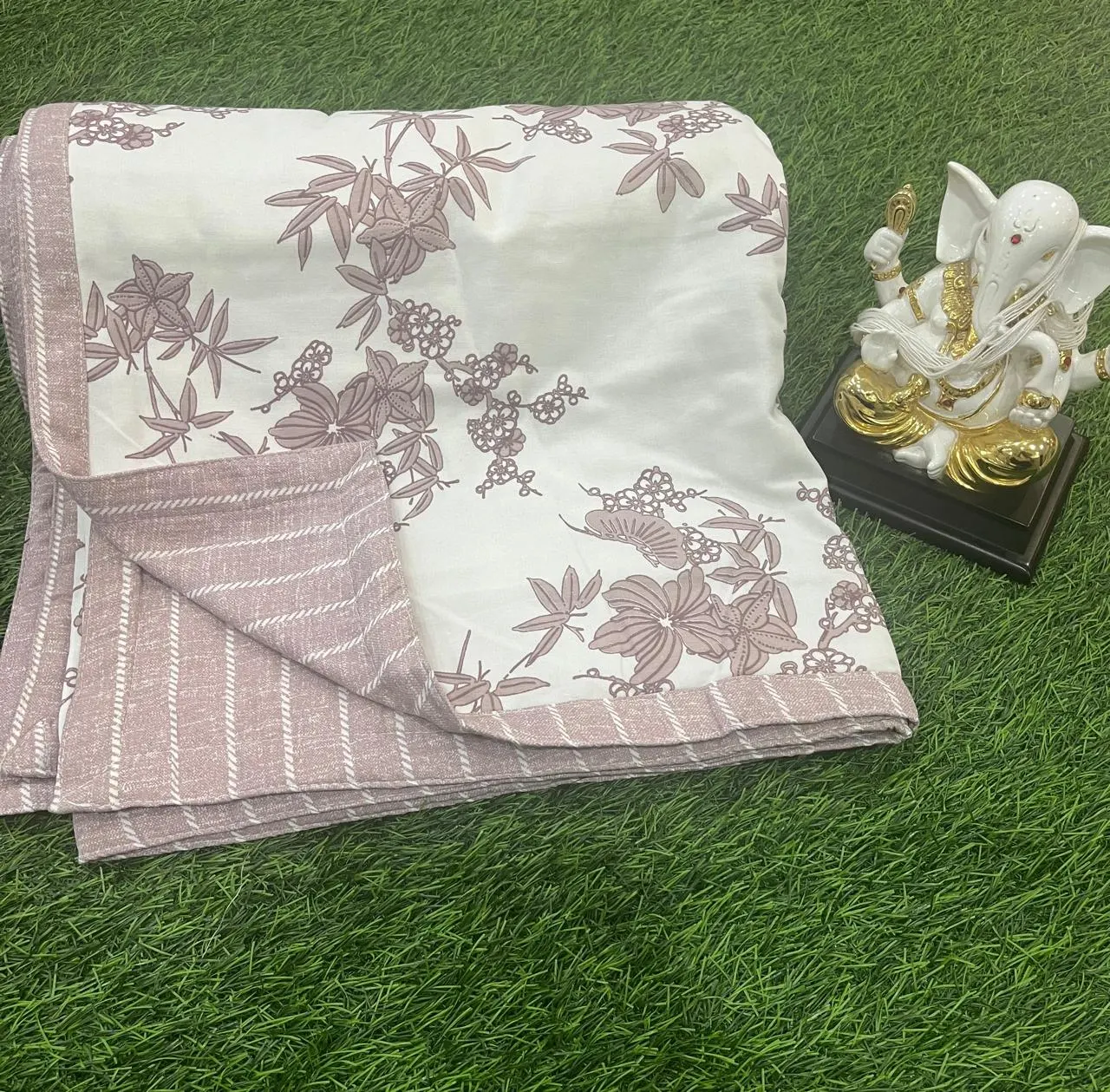
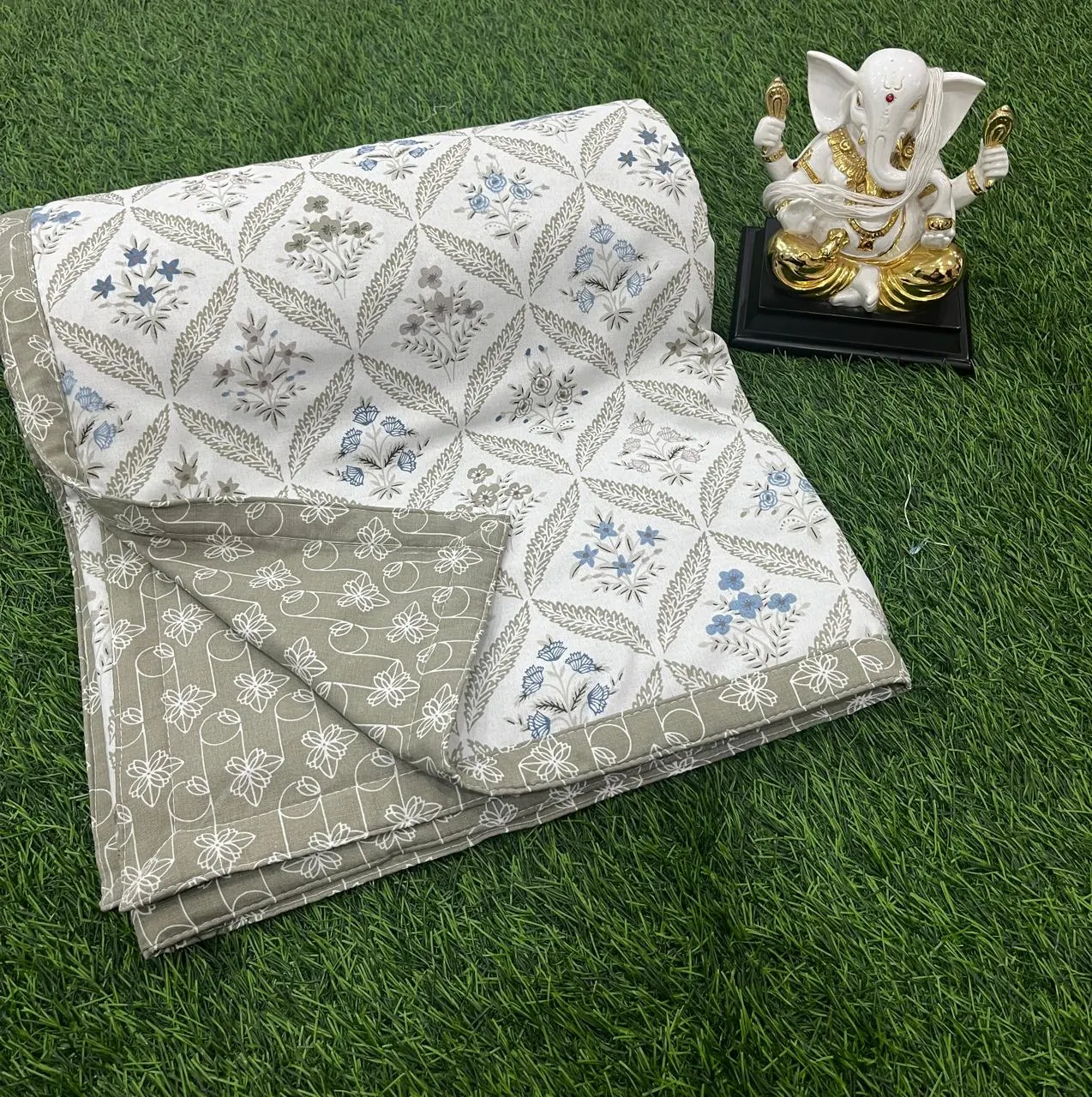
Volume & Customization — Private Label at 500+ Units
For buyers building a branded retail range rather than reselling generic stock, we run private label programs on qualifying bulk volumes. This is where the best winter items for textile retail — razai, dohar, and heavier quilts — become genuinely differentiated stock rather than commodity product.
- Private labeling for 500+ units: Your brand's woven care label, custom packaging, and box branding on a dedicated production run.
- Custom sizing: Single, double, king, and export-market dimensions available on request beyond our standard size range.
- Machine-quilted or hand-stitched Jaipuri quilt bulk: Choose construction method to match your target retail positioning and budget.
- Custom fill GSM: Specify a fill weight matched to your target market's winter severity rather than accepting a standard SKU.
Stocking Strategy by Buyer Type
- General home textile retailers: Stock a base range in cotton and mulmul fabric tiers, weighted toward your region's typical winter severity. Cooler North Indian markets can carry deeper stock; milder southern and western markets should stock lighter with faster reorder cycles.
- HORECA buyers (hotels, resorts): Winter linen procurement should be finalised by September for properties expecting winter occupancy — see our HORECA & Corporate Gifting page for property-specific guidance.
- E-commerce sellers: List winter bedding by early September even if you haven't received physical stock yet — search demand for winter bedding terms begins climbing well before the cold weather actually arrives.
- Private label / D2C brands: Plan private label production runs (500+ units) at least 8-10 weeks ahead of your intended launch date to accommodate custom label and packaging lead time.
Planning a private label range? Ask about our 500+ unit program
Call Now →Shipping, Logistics & GST Billing
Every wholesale order — standard stock or private label — ships with the same B2B logistics and billing standard:
- 100% GST-compliant tax invoice: GSTIN, HSN code, and tax breakup on every invoice, so your finance team can process the purchase normally, including applicable GST input credit.
- Pan-India dispatch: Tracked courier and freight partners ship directly from our Sanganer factory to any city in India.
- Dispatch tracking by call or SMS: Tracking ID and invoice shared by call or SMS the moment your order is dispatched.
- Bulk freight coordination: For large volume orders, freight/transport booking can be arranged or coordinated with your preferred logistics partner.
The Diwali Capacity Conflict — Plan Both Orders Together
If you are also planning Diwali corporate gifting orders — see our complete Diwali gifting budget guide — be aware that both seasonal demand spikes draw on the same manufacturing capacity in the same calendar window. A buyer ordering both winter razai stock and Diwali gifting bedsheets should plan both orders together in the July-August window, rather than treating them as sequential decisions made months apart.
Unlike informal cash-and-carry traders, every purchase from us is fully invoiced — letting your accounts team book the expense correctly and claim eligible GST input credit, which effectively reduces the net landed cost of your winter stock.
Frequently Asked Questions
Get Your Winter Stock Quote
Production capacity is still open in June-July. Call / SMS our B2B desk with your quantity, target GSM, and whether you need standard stock or a private label run — pricing back within 2 hours.