

Our bedsheet quality check process runs every order through a 3-stage factory QC check — Weaving Flaws, Print Registration Errors, and Stitching Accuracy — before it's ever packed for dispatch. Cotton bedsheet weaving defects like broken threads or holes are screened out at the fabric stage, while natural block-placement variation in authentic hand block prints is not a defect, it's a sign of genuine handcraft. As a reliable bedsheet manufacturer in Jaipur, we inspect every piece ourselves because we made it — unlike traders who buy and resell sealed bales unopened. If a genuine defect ever slips through, our B2B replacement policy covers it at zero cost to you. Call / SMS 8107492335 — partner with a manufacturer that actually inspects your inventory.
What This Guide Covers
Inconsistent quality is the single biggest threat to your retail reputation — not a slow season, not a competitor's discount. A customer who receives one defective bedsheet doesn't just return that piece; they lose trust in your whole store. Every claim in this guide about our bedsheet quality check process exists because we've watched retail partners lose repeat customers over quality issues that originated at a supplier they never actually vetted.
The 3-Stage Factory QC Process
Textile quality control standards India buyers should expect from any serious manufacturer come down to inspecting three distinct failure points, because a defect can be introduced at any one of them independently.
Ask about our QC process for your specific order
Call Now →Craft Variation vs. Manufacturing Defect
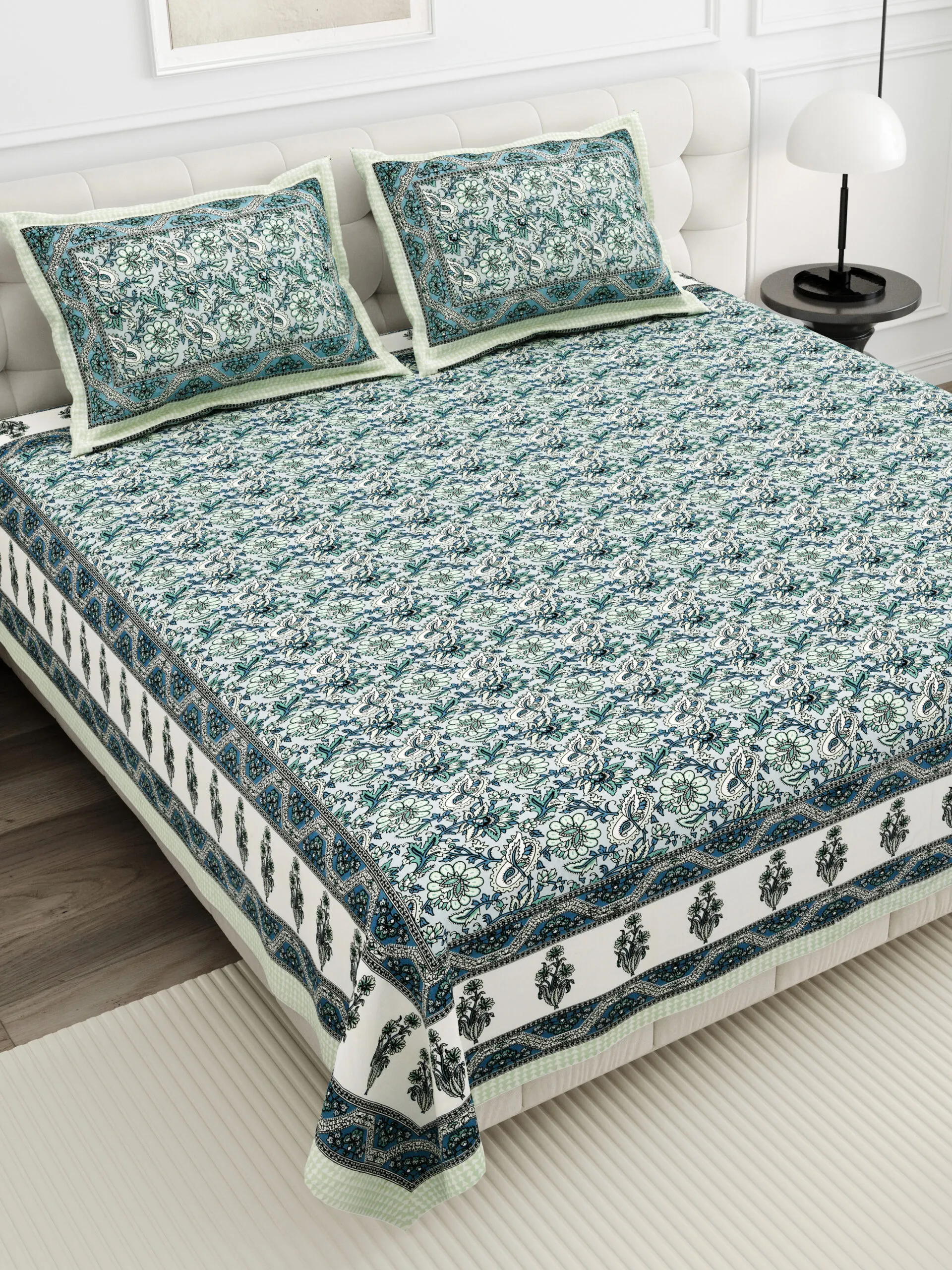
One of the most common misunderstandings in wholesale bedsheet buying is mistaking authentic hand block craft variation for a manufacturing defect. Knowing how to check fabric quality for bedsheets means knowing the difference — and it matters directly for how you set customer expectations too.
| Characteristic | Craft Variation (Authentic) | Manufacturing Defect (Real Issue) |
|---|---|---|
| Block print alignment | Slight, natural overlap between stamps | Ink smudging, bleeding, or dragging |
| Print edges | Soft, hand-stamped edge variation | Blurred or doubled registration lines |
| Fabric surface | Natural cotton texture, minor slub | Torn fabric, holes, or thin patches |
| Seams and hems | Consistent, secure stitching | Loose threads, uneven or open seams |
| What it signals | Genuine handcraft, not a machine copy | A genuine quality control failure |


Sharing this distinction with your end customers turns a potential complaint into a selling point: slight block variation is proof they bought genuine hand block craft, not a factory-perfect machine imitation.
Why Traders Ship Defective Goods
The blind-bale problem is simple: traders buy and resell sealed fabric bales without ever opening and checking individual pieces inside. They are reselling someone else's production run, not manufacturing and inspecting it themselves — so a defect introduced at weaving, printing, or stitching can travel undetected straight through to your shelf.
- Buys and resells stock without opening every piece
- No accountability for how the goods were made
- Defects discovered only after they reach you
- No direct QC process of their own
- Inspects every piece it manufactures, three stages deep
- Directly accountable for weave, print, and stitch quality
- Defects caught before packing, not after delivery
- A real QC process backed by a real factory
See our manufacturer vs trader guide for the broader margin and control case — the quality control gap is the same underlying reason a direct factory is more reliable than a reseller in the middle.
Our B2B Defect Replacement Policy
You Should Never Absorb the Cost of Our Mistake
Our 3-stage QC process is thorough, but no manual inspection process is statistically perfect. If a genuine manufacturing defect slips through and reaches a retail partner, we replace the affected pieces at no cost — full stop.
To qualify, report the defect with photo or video documentation within your claim window from delivery. This is exactly why the inspection steps below matter: documenting an issue at the moment you find it is what makes a fast, no-argument replacement possible.
Ask about our claim window and documentation process
Call Now →How to Check Bedsheets for Manufacturing Defects Upon Arrival
- 1. Hold the fabric up to light: Reveals thin spots, holes, or weaving irregularities not visible under normal lighting.
- 2. Check print registration: Machine prints should have clean, aligned layers; hand block prints should show natural, minor placement variation — that's authenticity, not a flaw.
- 3. Inspect stitching and hems: Even tension, no loose threads, consistent seam width throughout.
- 4. Compare against your approved sample: See our sample kit guide — your bulk order should match what you approved, not just look "similar."
- 5. Document any genuine defect immediately: Photograph or video the issue at the time of opening and report it within the claim window to qualify for replacement.
Frequently Asked Questions
Partner With a Manufacturer That Actually Inspects Your Inventory
Stop absorbing quality risk from suppliers who never open the bale. Partner with a manufacturer that actually inspects your inventory — every piece, every stage.